
MULATOPIA
On Imagined Places

What is my Afrofuturism?
That’s a mighty good question.
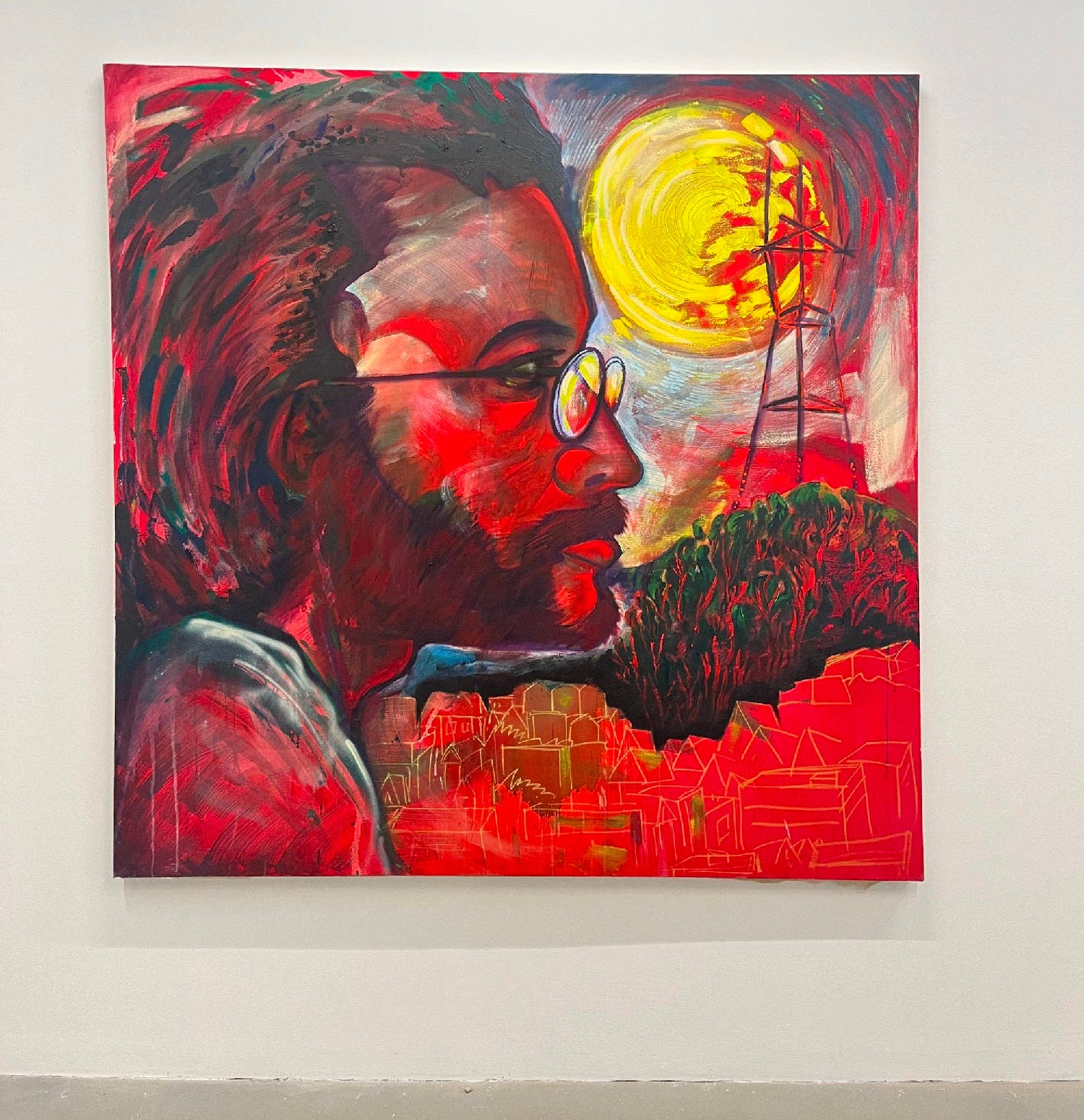
My father used to joke around with me about a hypothetical black metropolis, like a Wakanda, if you will. We had always been huge comic nerds. Only this was no high-tech African civilization. My dad was more concerned about basketball and BET in his affectionately named “Mulatopia”. I think we felt trapped then, by a rapidly changing city that was never particularly large. One could feel it everywhere, with every black owned barbeque joint gradually replaced by their updated yuppified counterparts, even portions became more claustrophobic. This necessitated the hypothetical, the dream-scape, the tabula rasa, our “Mulatopia”.
In this afro-opolis, this fiendishly twisted town, basketball players no longer needed to shoot the ball ad infinitum, as now, their baskets could be filled by the end of the game, thus putting an end to the eternal cycle of shoot and swish. They no longer “buy their own chains” as a once great man once said when he was great, instead they invest in government-regulated bonds, ensuring generations of wealth and prosperity. They also learn brilliant financial handling, and statistically speaking, most retired athletes go on to open used-car dealerships and boba shops.
In this world, there was no GI bill after world war 2, so there was never a great white flight, so the cities stayed populated while black people could move to the suburbs so their kids could develop personality disorders and opiate dependencies.
In this world, no one teaches WEB Dubois or pronounces his name correctly. Society ascribes to Booker T and his little fingers of autonomy. Separate but equal, yeah, and not a single word of double consciousness because no one needs it anymore. They are wholly themselves through and through.
In this world, everyone smoked mentholated cigarettes and black n milds, which were in turn advertised on bus stops and in doctors’ offices. The tobacco lobby was as powerful as in any world, but now black people could take advantage of their own communities. The first colonies had grown tobacco, picked by European indentured servants, with African immigrants being the landed aristocracy.
In this world, Jay Z became president in a landslide vote. There was a huge controversy as he still had partial ownership of the Nets and Ace of Spades, leading to a conflict of interest. During the congressional hearing, Jay-Z’s testimony, which is of “This ain’t no peanut farm,” would go down in history, but ultimately, no one really cared because Beyoncé was the first lady, and that was more important.
In this world, the cities aren’t choked with congestion and smog but filled with wildlife, wonderfully integrated throughout the concrete. Roses sprout from cracks in the cement, and people still love and understand nature as if they had never forgotten.
I could never quite tell if this world was any better than the one my feet were planted in. Would a reversal of racial fortunes render the same circumstances? Was external and internal unity just a hop, skip, and some reparations away? Probably not. My father’s prescribed hyper-fantasy wasn’t even much of a fantasy at all. Imagining a world unlike our own could only bring the violent realities into stark, uncompromising daylight, albeit in a humorous manner. History had wrought our paths surreptitiously, leaving us stranded in San Francisco, anything but a bastion of blackness. We could not help but fantasize and dream about where historical pain was made absurd. That was the point of Mulatopia, a safe haven for dreams, jokes, and all of the space we never had.
Mixed race was once a transgression like transgender, an existence that destroys the social categories. Would there were a place where we didn’t need to operate within our stereotypes.